
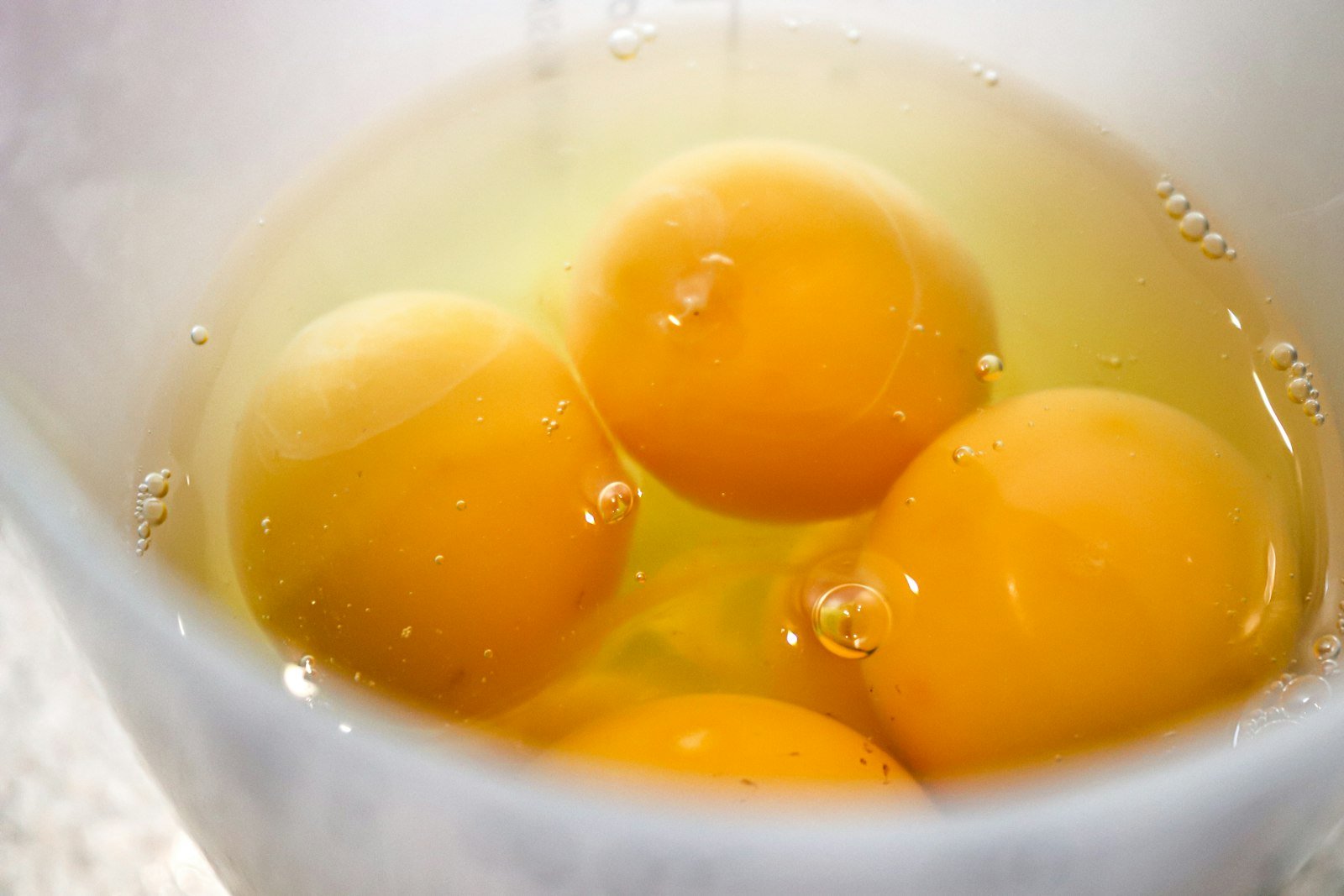
Can You Freeze Eggs? Yes, Out of the Shell, for Up to a Year

Can you freeze eggs? Yes, as long as they are out of the shell. The USDA says raw whites and beaten whole eggs keep for up to 12 months in the freezer. Eggs frozen in their shell are another story, and so are hard boiled eggs.
Whenever a recipe at my guesthouse called for yolks only, the spare whites went into an ice cube tray, then into a labeled bag, and came out weeks later for meringues.
In short
| Question | Answer |
|---|---|
| Can you freeze raw eggs? | Yes, cracked out of the shell (USDA, checked November 2026) |
| How long in the freezer? | Up to 12 months for raw whites and beaten whole eggs, at 0°F (-18°C) |
| Whole eggs in the shell? | No: the USDA says do not freeze eggs in the shell |
| Egg yolks alone? | They thicken when frozen; beat in a little salt or sugar first |
| Hard boiled eggs? | Do not freeze them whole: the whites turn tough and watery |
| How to use them | Thaw in the fridge, use right away, only in dishes that are fully cooked |
Why eggs must come out of the shell
The liquid inside an egg expands as it freezes, and the shell can crack. A cracked shell is an open door for bacteria. That is why the USDA egg storage chart says plainly: raw eggs in the shell, do not freeze.
If a carton gets frozen by accident, at the back of a fridge that runs too cold for instance, FoodSafety.gov gives two rules. Throw away any egg whose shell cracked. Keep the intact ones frozen, then thaw them in the refrigerator and use them as soon as they have thawed.
How to freeze whole eggs
- Start with fresh, clean eggs with uncracked shells.
- Crack each egg into a small bowl first, so one bad egg or a piece of shell does not spoil the batch.
- Beat the yolks and whites together just until blended, without whipping in air.
- Portion them. An ice cube tray works well: freeze, then move the cubes to a freezer bag or container.
- Leave about half an inch of headspace in containers, since the eggs expand.
- Label with the date and the number of eggs.
- Freeze at 0°F (-18°C) or colder.
Frozen this way, whole eggs keep their best quality for up to 12 months, according to the USDA FSIS. Beyond that they stay safe as long as they remain frozen, but quality declines.
How to freeze egg whites
Egg whites are the easiest part to freeze. Pour them into a container or an ice cube tray, without salt or sugar, seal and label with the number of whites. The USDA gives raw egg whites the same 12 months in the freezer.
Thawed whites still whip well for meringues and soufflés. Let them stand at room temperature for a short while before beating, but no longer than needed: the USDA asks that perishable foods spend no more than 2 hours out of the fridge.
How to freeze egg yolks
Yolks are trickier. On its own, a yolk turns thick and gel-like in the freezer, so much that it becomes hard to mix into a recipe. The USDA chart notes that yolks do not freeze well as they are.
The fix is a pinch of salt or a little sugar. The USDA FSIS suggests beating in 1/8 teaspoon of salt or 1 1/2 teaspoons of sugar or corn syrup for every 1/4 cup of yolks, about 4 yolks. Choose salt for savory dishes and sugar for desserts, and write which one you used on the label.
Can you freeze hard boiled eggs?
Not whole. FoodSafety.gov lists hard cooked eggs as “do not freeze”: the cooked whites turn tough and watery once thawed. Keep them in the fridge instead, where they last up to a week; see how long hard boiled eggs last in the fridge.
Cooked yolks are the exception. Separated from the whites, they can be frozen and later crumbled over salads or deviled egg fillings.
How to thaw and use frozen eggs
Thaw eggs in the refrigerator, overnight, or under cold running water if you will cook them right away. Never leave them to thaw on the counter.
Use them as soon as they have thawed, and only in dishes that will be cooked all the way through: scrambled eggs, quiches, cakes, casseroles. The FDA asks that egg dishes reach 160°F (71°C), and that eggs themselves be cooked until both the yolk and the white are firm. Skip thawed eggs in homemade mayonnaise, mousse or anything else served raw.
As a guide, 3 tablespoons of beaten whole egg equal about one large egg, and 2 tablespoons of white equal one egg white.
Do you even need to freeze them?
Often not. The USDA says raw eggs in the shell keep 3 to 5 weeks in a refrigerator set at 40°F (4°C) or below. Freezing makes most sense for leftover whites or yolks after a recipe, or a carton you cannot finish before its date.
Separated raw whites and yolks keep only 2 to 4 days in the fridge, so freeze them early rather than after a few days. More storage questions are answered in the cooking section.