
How Long Do Eggs Last in the Fridge? 3 to 5 Weeks in the Shell

How long do eggs last in the fridge? Raw eggs in their shells keep 3 to 5 weeks, according to the USDA Food Safety and Inspection Service, in a fridge at 40°F (4°C) or colder. That window usually runs past the date printed on the carton, which is about quality, not safety. Once you crack them, the clock gets much shorter.
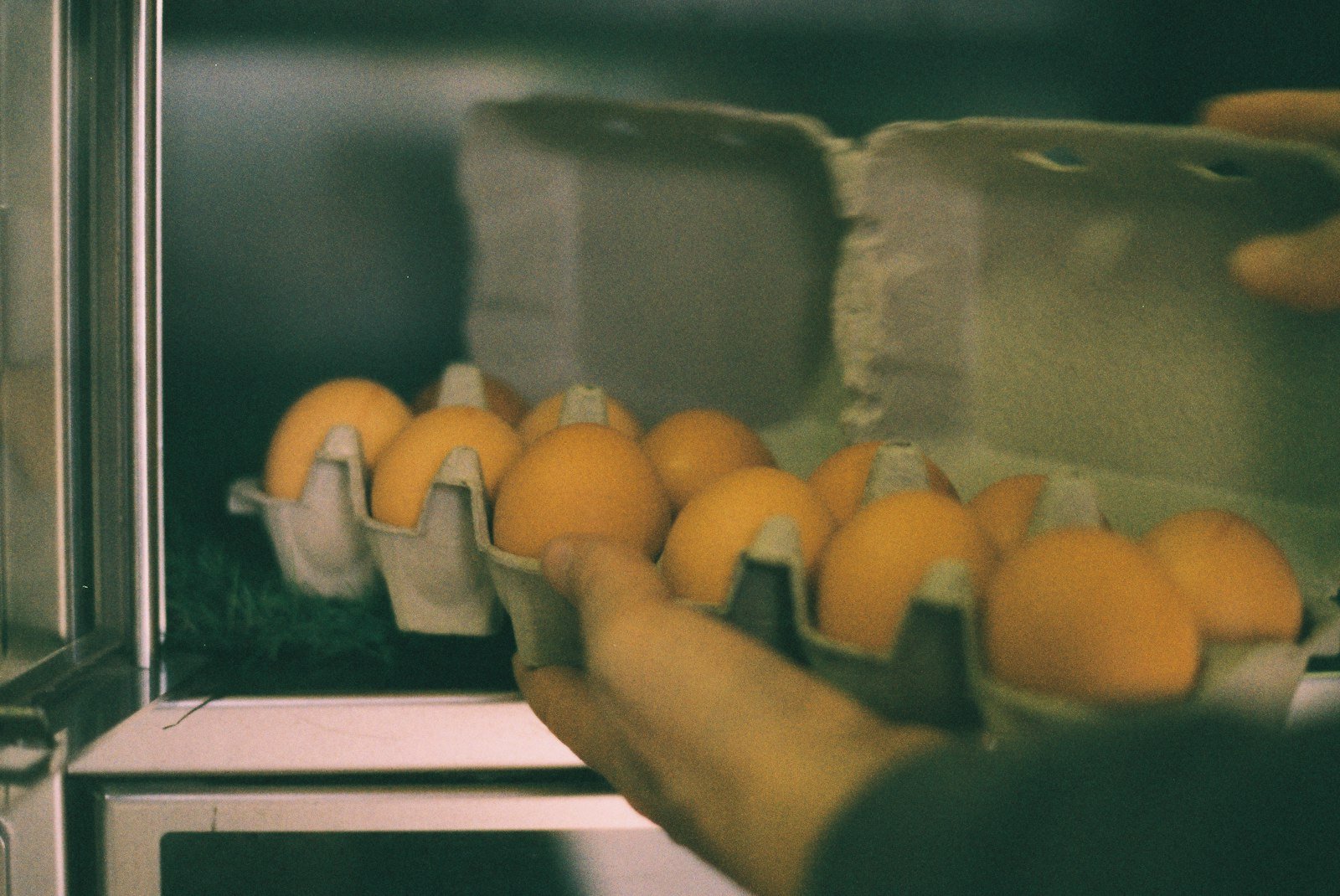
At my guesthouse, the eggs from the farm down the road went straight into the fridge in their carton, with the delivery date written on the lid. Breakfast always started with the oldest box.
In short
| Question | Answer |
|---|---|
| Raw eggs in the shell | 3 to 5 weeks in the fridge (USDA) |
| Raw whites or yolks, out of the shell | 2 to 4 days (USDA) |
| Hard-boiled eggs | 7 days (USDA) |
| Fridge temperature | 40°F (4°C) or colder |
| Out of the fridge | 2 hours at most, 1 hour above 90°F (32°C) (FDA) |
| An egg that floats | Poor quality, but it may still be safe (USDA) |
USDA and FDA guidance, checked November 2026.
3 to 5 weeks: where the number comes from
The USDA’s storage chart for shell eggs gives raw eggs in the shell 3 to 5 weeks in the refrigerator, and advises against freezing them whole in the shell. The agency asks you to refrigerate eggs as soon as possible after you buy them.
Count from the day you bought them, not from the date on the box. Writing the purchase date on the carton is the easiest way to keep track.
What the date on the carton means
US egg cartons can carry a “sell-by,” “best if used by” or “expiration” date, and some state laws do not allow a sell-by date at all, the USDA notes. When a sell-by date appears on a carton with the USDA grade shield, it may not be more than 30 days after the eggs were packed.
These dates are about quality. Eggs kept cold usually remain good after a sell-by date passes, within the 3 to 5 week window from purchase.
Washed US eggs and unwashed eggs
In the United States, commercial eggs are washed before sale, which is why they must stay refrigerated. In the UK and much of Europe, eggs are not washed and are often sold unrefrigerated. The UK Food Standards Agency still advises storing eggs in the fridge until you use them.
Whatever their origin, once eggs have been chilled, keep them chilled. The FDA’s two-hour rule applies: eggs should not sit out at room temperature for more than 2 hours, or 1 hour above 90°F (32°C).
How to store eggs in the fridge
- Keep them in their original carton. It protects them from odors and moisture loss, and keeps the date in sight.
- Store them on a shelf, not in the door. The door is opened constantly and is the warmest part of the fridge.
- Keep the fridge at 40°F (4°C) or below. A fridge thermometer is the only way to be sure.
- Put leftover whites or yolks in a covered container and use them within 2 to 4 days.
Does the float test work?
Put an egg in a bowl of cold water: a very fresh egg sinks and lies flat, an older one tilts or floats. The USDA explains that an egg floats when its air cell has grown large enough to keep it buoyant. That means poor quality, but it may be perfectly safe to use.
So the float test tells you about age, not about bacteria. A fresh-looking egg can carry Salmonella, and a floating one may be fine. Crack it into a separate bowl and check its smell and look before using it.
When to throw eggs out
- they have been in the fridge more than 5 weeks since purchase;
- they sat out more than 2 hours (1 hour in the heat);
- the shell is cracked or dirty;
- once cracked, the egg smells bad or looks discolored.
For eggs you have already cooked, see how long hard boiled eggs last in the fridge. If you have more eggs than you can use in time, you can freeze them out of the shell. More storage questions are answered in the cooking section.